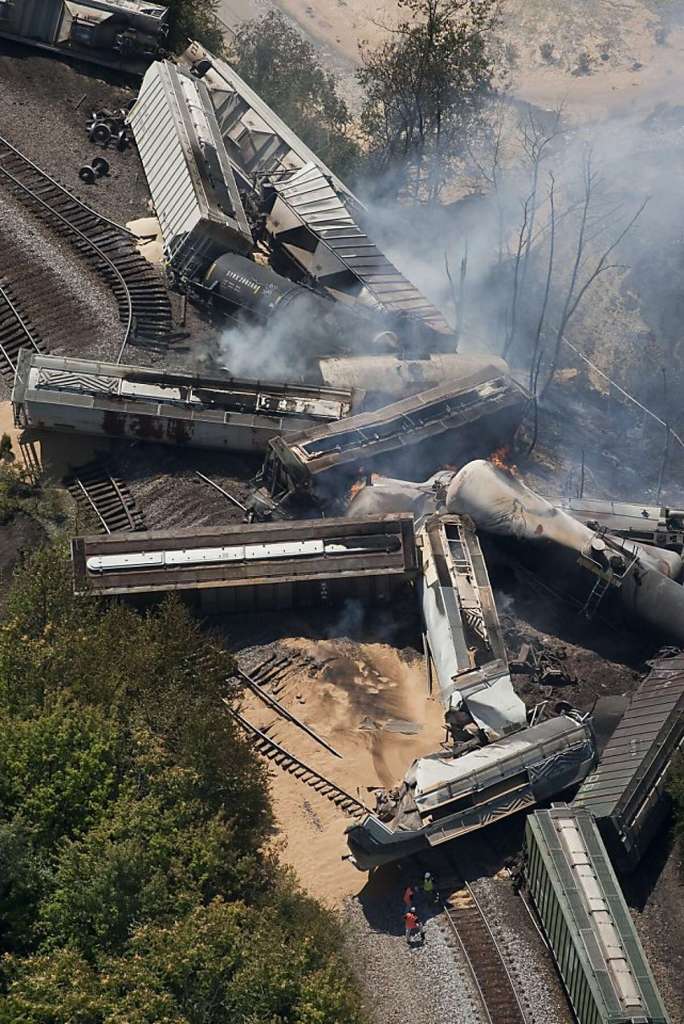
Around 3:30 AM on December 6, 1970, an eastbound freight train derailed in the town of Le Roy, New York. Several of the train’s cars ruptured, spilling a ton of cyanide crystals and over 30,000 gallons of trichloroethylene (a common industrial degreaser at the time). Officials were able to clean up the cyanide, but the trichloroethylene soaked into the surrounding area, initially contaminating a few nearby wells. Early clean up efforts only worsened matters, contaminating groundwater and dozens more wells.
In 1998, the U.S. Environmental Protection Agency named the Le Roy spill area a Superfund site. 54 years after the spill, clean up efforts continue (the latest plan was approved as recently as 2023), underscoring the formidable challenge facing public sector agencies charged with cleaning up privately made environmental messes.
In 2003, New York began enlisting the help of the private sector to tackle its contaminated sites, through its newly created Brownfield Cleanup Program. According to New York’s Department of Environmental Contamination (DEC):
“The goal of the Brownfield Cleanup Program (BCP) is to encourage private-sector cleanups of brownfields and to promote their redevelopment as a means to revitalize economically blighted communities … The BCP is an alternative to greenfield development and is intended to remove some of the barriers to, and provide tax incentives for, the redevelopment of urban brownfields.”
Notably, DEC’s BCP mission statement doubles-down on its clean up commitment by also paying for what comes next. At the end of the day, the program is designed to generally cover the full clean-up cost plus a hefty chunk of the cost of redevelopment.
This two-part series will dig into (pun intended!) New York’s BCP, starting with a discussion of the program’s history, requirements, and operation. The second part will explain how brownfield clean up and redevelopment generate New York income tax credits that can be monetized to help pay for those activities.
Up next: Part 1 – Navigating New York’s Brownfield Cleanup Program …
_________
Jason Yots has been a real estate and tax credit development attorney since 1996, and currently is a partner at the law firm of http://www.chwattys.com. Jason also is the founder of http://www.preservationstudios.com, an historic preservation consulting firm, and http://www.commonbondrealestate, an historic rehabilitation firm. He is based in Buffalo, NY.
 Rust Belt Redemption
Leave a comment