For over four generations, residents of Buffalo, New York’s East Side smelled fresh baked bread as they went about their morning activities, courtesy of the massive ovens on the first floor at 356 Fougeron Street. Locally known as the Wonder Bread building, the 180,000 square foot factory produced the famous sliced bread and, later, Hostess snacks from 1923 until 2004, when the last remaining 150 employees shut down the massive ovens for the final time.
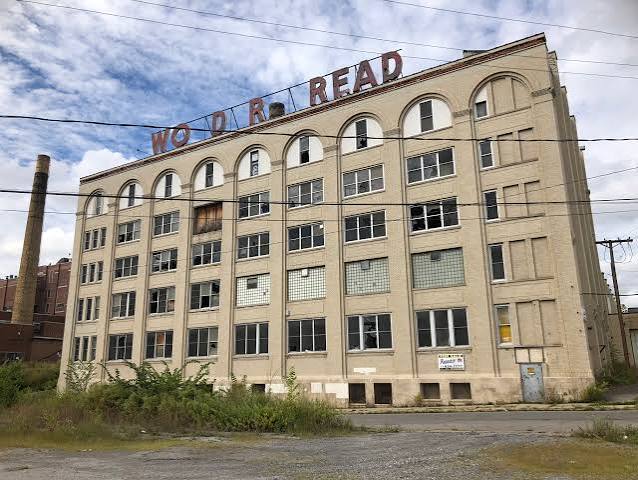
The Wonder Bread building has traveled the same path as so many Rust Belt manufacturing facilities: productive, intended use transitions to under-utilization, which leads to eventual vacancy, before total abandonment. These massive complexes, known as “white elephants”, pose daunting challenges for communities to protect and manage, draining precious public resources.
White elephants are difficult and expensive to adapt to new reuses because they tend to be huge and they often are remotely located, intertwined with active rail lines, and environmentally contaminated. Considering the dwindling populations of most Rust Belt cities, this generally would not be a recipe for rebirth.
In New York, which is home to dozens of white elephants, lawmakers have proposed a new tool to help communities reclaim and reuse those resources. Working with New York’s already robust state historic tax credit (“HTC”) program, sponsors have proposed amendments[1] that would seek to specifically address the white elephant challenges facing so many communities.
If adopted as proposed, the changes would apply to “certified historic structures” that have been vacant for at least 10 of the last 15 years, and for which the developers will incur “qualified rehabilitation expenditures” (“QREs”) of at least $50 million, and would include:
- Extension of the current HTC enabling legislation through 2037, acknowledging that developers and investors for multi-phase white elephant projects will need assurance that the HTC program will exist long enough (the federal HTC legislation currently is permanent, subject to appropriation).
- Increasing the program’s current $5 million per building cap to $15 million for white elephant projects.
- Exempting low-income housing projects using state HTCs from the program’s requirement that eligible projects be located in a census tract at or below 100% of the state median family income.
- Clarifying that state HTCs for white elephant projects may be separately allocated from the federal HTCs for the project.
Regarding the last item, the timing of the proposed white elephant legislation coincided with the issuance of new guidelines[2] regarding the process for, and restrictions on, transferring state HTCs to an investor otherwise unrelated to the project. It generally is expected that allowing such “bifurcation” and transferability will increase demand, and therefore pricing, for state HTC investment.
Let’s examine how the proposed white elephant legislation could help redevelop the Wonder Bread building. And let’s assume the developer is pursuing a mixed-use brownfield project that includes workforce housing on upper floors and offices and “maker” spaces on the ground floor.
At roughly 180,000 SF, construction costs alone for that type of adaptive reuse surely will exceed the $50 million threshold for white elephant status. The building also arguably has been vacant for at least 10 of the last 15 years, having ceased active operations in 2004. The building was listed in 2021 in the National Register of Historic Places, making it is a “certified historic structure.”
It seems, then, that the Wonder Bread building could be eligible for white elephant status. Let’s next look at the math. Currently, the per-building cap on state HTCs is $5 million (20% of $25 million in QREs), typically netting about $3.5 million to pay project costs, after syndication and taxes. Raising the cap to $15 million for white elephants could net more than $10 million in proceeds for certain projects, depending on several factors.
When aggregated with federal HTCs, state brownfield tax credits (BTCs), and other economic development incentives, a capital stack for the mixed-use adaptive reuse of a project like the Wonder Bread building could look something like this:
| $72,000,000 | Total Development Cost |
| $10,000,000 | federal HTC proceeds |
| $8,500,000 | state HTC proceeds for white elephants |
| $5,000,000 | state BTC proceeds |
| $11,000,000 | developer equity |
| $37,500,000 | mortgage loan |
We have made a lot of assumptions with this example, but this capital stack could be feasible with the right developer and support team.
[1] [New York S6021A, A10366. Sponsors: Senator April Baskin (Buffalo) and Assemblymember Pamela Hunter (Syracuse)
[2] State Historic Tax Credit Transfer Program, HP-PRO-009, April 23, 2026


Leave a Reply